Podcast: Play in new window | Download
Subscribe: Email | TuneIn | RSS
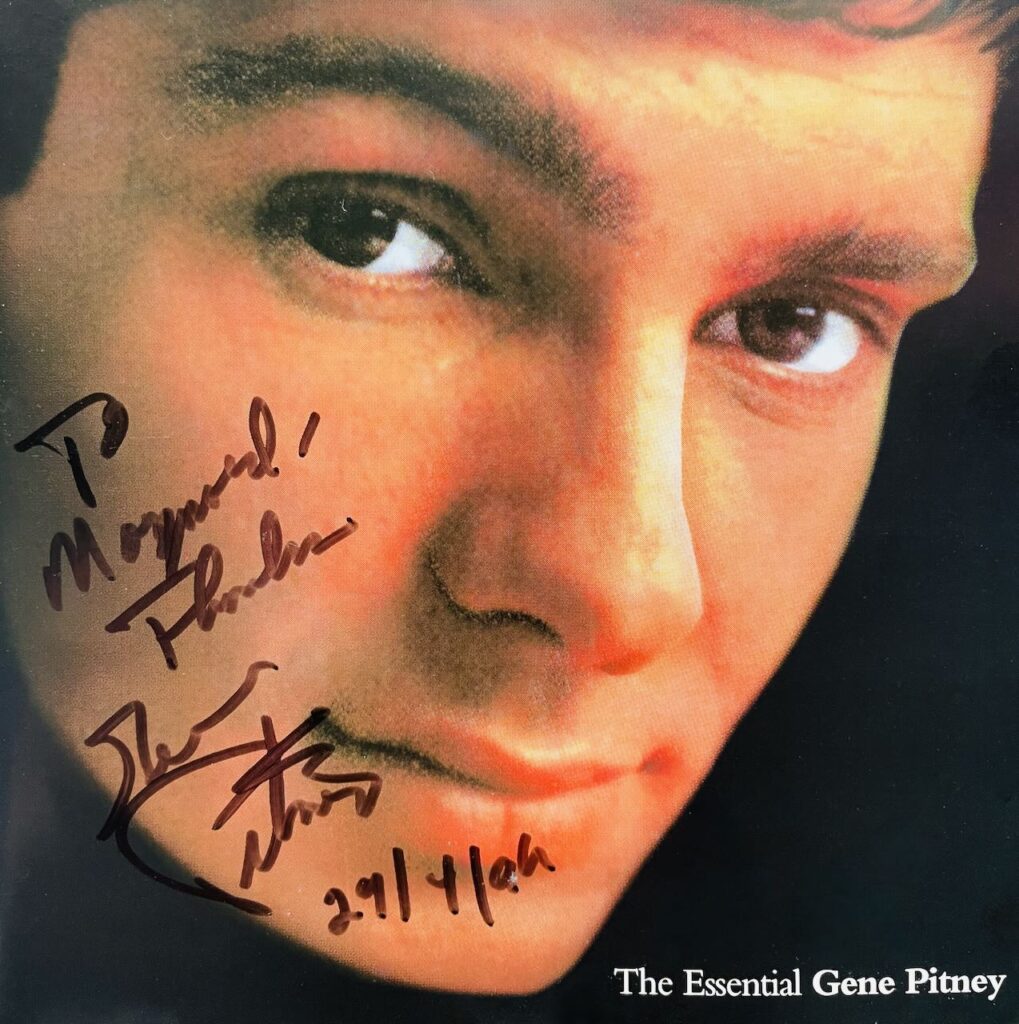
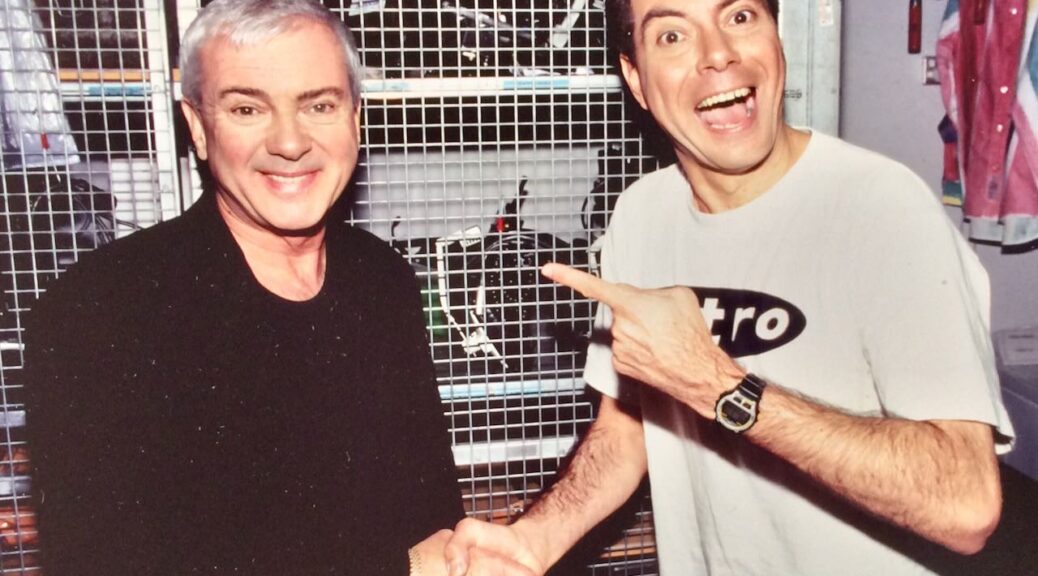
Gene Pitney toured Australia in October 2003. It was his last time in Australia as he died while on tour in the UK in 2006. I caught up with him at the beginning of that 2003 tour in Sydney. He told me the stories behind some of his iconic songs, from 1961’s Town Without Pity to his collaboration with Marc Almond in 1989, Something’s Got A Hold Of My Heart.
Maynard: Gene Pitney, welcome once again to Australia.
Gene: Thank you very much, Maynard.
Maynard: How many times all up now?
Gene: A hundred.
Maynard: A hundred times. It feels like that, hey?
Gene: I don’t really know, but I think at least a dozen times since the early sixties.
Maynard: Do you remember the first tour? Was it very strange to be so far away?
Gene: The very first tour was with a bunch of Brits, I think it was when the, uh, so-called British Invasion happened, and it was Dusty Springfield, Gerry and the Pacemakers, Brian Poole and the Tremolos and me.
Maynard: Who was your major competition when you were first starting out? Who was the person you really had to worry about?
Gene: I never, ever thought of it in that direction at all. I just loved what I was doing, loved having the opportunity of being out there, and there wasn’t an awful lot of that around at that time. I think there was a great camaraderie in the sixties. People would join in and if somebody was doing a session, they would say, if you’re a town or something and you run into ’em, they’d say, come on, stop by and see what’s going on. There was no really great competition. The competition was the audience going out and seeing how good a show you could do.
Maynard: One of the strangest connections I’ve found with you is you’ve got a Rolling Stones connection.
Gene: Well, it was political to begin with. My publicist in the UK, Andrew Loog Oldham, was the Rolling Stonesí first manager. As a result, we got to know each other. I had never ever seen a guy with long hair like that before. Nothing like they are now. When they first started out, they had really, really long past the shoulders type hair, you know? And I remember I had a guy traveling with me from home in Connecticut, and he took a picture. That was when Brian Jones was still alive and in the group. When he got home, he showed it to his wife and she said, who are those four ugly broads? They were not pretty with the long hair, I’ll tell you, at the time.
Maynard: You ended up doing a bit of work with them and, and swapping songs?
Gene: Yeah. Well, we, we didn’t do any tours together, but we, did a lot of television together and a lot of promotion when they were out with their first recordings. They had a song that they had actually recorded with a guy named George Bean. They didn’t like the way it came out and they played it for me and I loved the track. I loved the orchestration on it. So I said to them, look, if you let me rewrite the melody to it so it fits what I’m doing, and having the success with, I’d love to take a crack at doing a vocal on it. So we went back in the same recording studio, Olympia Studios in London. I did the vocal with the harmonies on it, and it came out excellent. So I sent it back to New York first and they put it out to go on the US charts. At the time I was new to the business, the Rolling Stones were brand new to the business and hadn’t had that much success. It was just another thing that we were doing.
Maynard: How do you find the business part of the music business?
Gene: Unfortunately, it’s gotten way over that side of it now. When I first started, it was the music side. There were a lot of companies that were run by eccentrics that made it really interesting. People like George Goldner, I remember in New York, and Hy Weiss, people that ran a lot of the small independent labels. They were really characters. George Goldner was always with his big giant cigar. I’ll give you an instance: the guy that brought me to New York the first time brought me into George Goldner’s office to see if he would record me. I was in an outer office that had a piano and he came crashing through the door and said ìSing!î And I was just a green kid from this little town in Connecticut, you know? And I said ìJesus, you know, who is this?î So I sat down and I played a couple of the songs I had been writing and he said ìStop!î He said ìWhen is your birthday?î And I said ìFebruary 17th.î And he said ìSign him, he said he’s an Aquarius.î But I didn’t know anything about the star signs at the time, and I thought the guy said I was an aquarium. So when he went back in his office and stormed off again, I told the guy I was traveling with, I said ìThis guy’s nutsî and I said ìI’m outta here!î So we left and vanished, and years later he heard the story back and he came to me somewhere we were, and he was roaring laughing. He says ìI can’t believe I lost you as an artist ’cause you thought I called you an aquarium!î, but those were the guys that ran the industry and they were bigger than life. Unfortunately, now it’s more like all accountants, it’s all money and it’s all bottom line and it doesn’t have the same ring to it that it had then, the same excitement value.
Maynard: You’re touring Australia again, you’ve said that there’s no way you could do two thirds of a show. You’ve always given and gotten a full show out. A lot of your songs are gut-retching, emotional songs. How do you go through this every night?
Gene: Uh, it’s not difficult. They’re great songs and I love that part of it. I love performing. When I say that I can’t do a shortened version or anything like that. Let’s say I had food poisoning, which I’ve gotten two or three times, you know, and really felt awful, and somebody would say to me, ìJust do an easy show, just go out and do a light showî, I can’t, I cannot do that kind of a show. I have to still put 150% into it. It’s funny. It’s so healing to do that. I’ve actually gone out feeling miserable. I had a wicked cold, I remember, one night, everything was possibly wrong, that could go wrong, except – and I got it ñ the nosebleed. Came on while the orchestra was playing the overture, and I got that cleared up just in time to walk out on stage. When I walked off and did the whole show, I felt terrific.
Maynard: Did it cheer you up? Did it put you up spiritually?
Gene: I don’t know whether the adrenaline or whatever it is, is self-healing or what, but if you can get through it, you put everything you got into it and walk off, have a good night’s sleep, a lot of times everything goes away. You’re okay.
Maynard: A lot of people ask you, is our Australian audience very different?
Gene: People always ask me that ’cause they expect different countries to be different. But I’m not sure whether it’s because of the songs that I have or the type of performer that I am, but I find it pretty much the same, the world over wherever I go. I don’t really find that much of a difference in an audience.
Maynard: You play Las Vegas, you do a lot of the casinos there. What is the audience like there? They’re a bit older, are they? Sometimes their attention wanders from time to time?
Gene: They’re all the same. I just played the Stardust for a week in Las Vegas, just a couple weeks back. I was trying to explain to somebody that people go there and get nervous. It’s almost like going to a big venue like the London Palladium or Carnegie Hall. The thing you have to remember is that those are virtually the same people that come to any other show in any other place. Just because they’re in here doesn’t change anything, you know? When they’re in a casino, they’re people that have come from all walks of life, all over the, all the country, all over the world. I had people there that are really aficionados that fly into all my shows. I had people in the front row from Colorado, Florida, Illinois, Chicago to those that flew all the way from Yorkshire in England. A hell of a long trip. If I was to go there. You know, I’m not knocking it. I think it’s wonderful that they do that.
Maynard: I hope you signed a CD for them, after all that.
Gene: It’s not a different type of an audience. It’s the same audience.
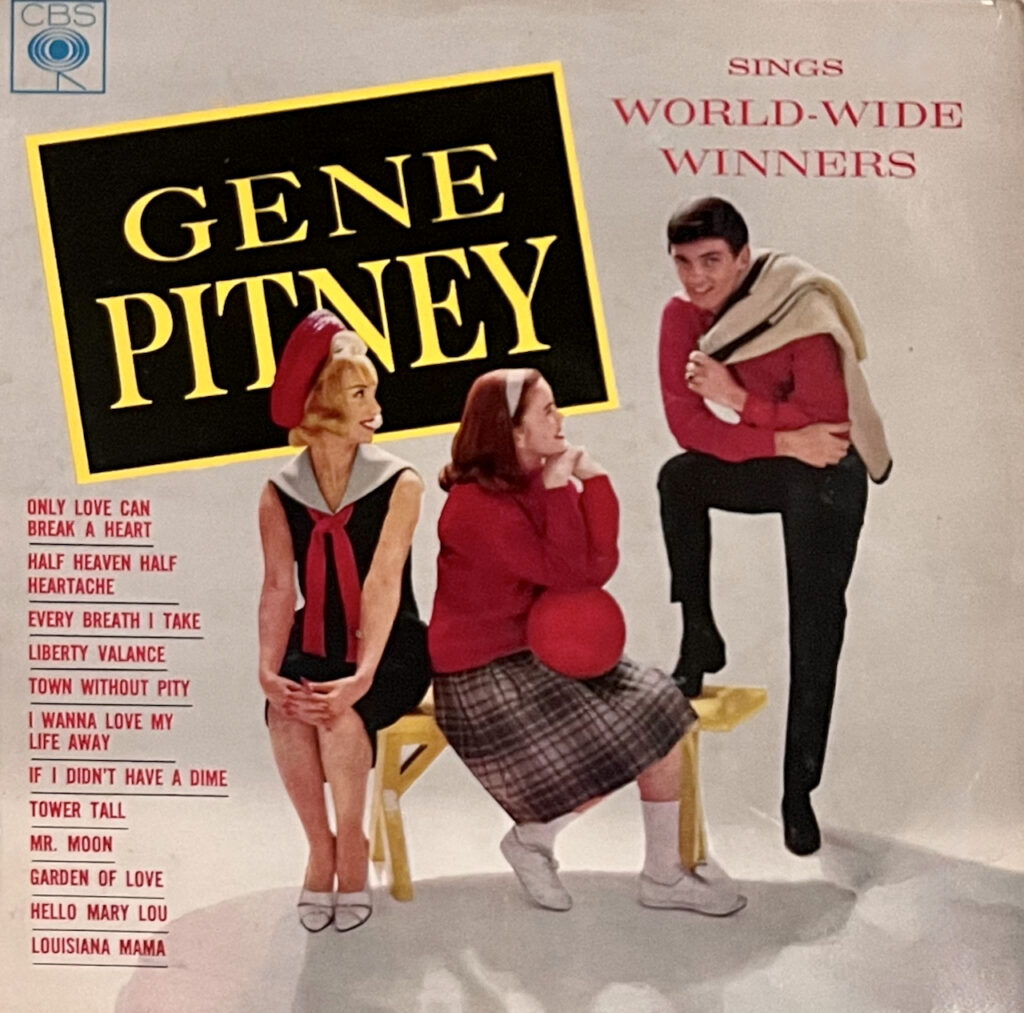
Maynard: ìThe Man Who Shot Liberty Valanceî.
Gene: It was never in the film at all. It’s the weirdest thing. I still don’t know to this day why. It would’ve been terrific in the film, whether I sang it or not. But because of the success of the motion picture theme that I had prior to that, Town Without Pity, a whole pile of different film scores came in and offers saying, ìWould you like to record this?î One came in and it was directed by John Ford. It had Jimmy Stewart, John Wayne, Lee Marvin, music by Bacharach and David. I mean, how do you turn that down? Paramount Pictures paid me to record the session. With all the kinds of perks that went along with it to do it. Then the film came out without the song in it. I’m sure it had something to do with business. It was something to do with politics, business. I have a feeling the publisher told the writers, Bacharach and David, that I’ve got the deal with Paramount for this picture. The writers did talking to Paramount, and something about it was back and forth and something went wrong with it. I’ll tell you the weirdest part about it – I found this out about five years ago – the music that was in the film was the score from a 1938 Henry Fonda film called Young Mr. Lincoln. The only connection being that John Ford directed both films. I don’t know whether they recycled it at the last minute for some reason because of this problem with the song, I don’t really know, but it’s one of those mysteries.
Maynard: Town Without Pity is one of your gut-wrenching emotional ballads.
Gene: Again, it was a political situation. I recorded for a small label called Musicor, and Musicor was distributed by United Artists Records, which were owned by United Artists Films who produced the movie. So by way of all those conduits, it came back to me being the artist on Musicor and they said, ìWe want you to record this song for the motion picture.î
Maynard: What’d you think of it at first?
Gene: Oh, I was scared to death of it. I listened to it and I thought I wouldn’t write a song like that, I wouldn’t pick a song like that to record.
Maynard: Is it because of the range involved in it?
Gene: No, it’s a very odd song. It’s still an odd song today. Even after the success, and hearing it many, many, many times, it’s a very unusual score. It’s to do with Dimitri Tiomkin writing the music, I think brilliant and beautifully done, but odd. And I thought, how do I approach this? How do I sing it? What do I do to get into it? I tried like a lot of different things, but because of the way that the melody flows and everything. Finally I realised that all I could do was sing it straight, as straight a version as I possibly could. I flew to Los Angeles my first time ever there. Went in the studio at about eight o’clock at night, and Aaron Schroeder, the producer, was with Dimitri Tiomkin in the booth. Now, this was a time when you’re recording, everything is done live. So all the musicians that were there, all the singers were there, the background singers and everything. Every time that they said, ìYeah, that was all right, but let’s do it again this way.î Everybody had to do it again. This went on from eight o’clock at night to four o’clock in the morning. I’m running out of throat and it’s going away rapidly.
Maynard: How many takes did you think you did?
Gene: Oh, I don’t know. I have no idea. All night long we sang this thing over and over and over and they were trying to find something to make it unique. What happened was that what started out being ìwhen you are young and so in loveî became (raspy) ìwhen you’re young and soî, and they said, ìThat’s it! That’s what we’re looking for, that’s the sound!î All you gotta do is record eight hours straight and you’ll get it like a raspy throat.
Maynard: How did that duplicate on stage now? Because you’re much more relaxed now.
Gene: I don’t even attempt to do that. I listen to it. It doesn’t sound as raspy as I thought it was on the night, but whatever it was, it made it very, very successful.
Maynard: You like to sing songs that have stories in them. 24 Hours from Tulsa is a classic. It’s got a beginning, it’s got an end. It’s a story song. Does that make it easier for you on stage, like you’re telling a story.
Gene: No, not easier, but I love strong lyric content and strong melodic content in any song no matter what kind of it is. I just think that today that’s really lacking in music.
Maynard: Have you heard anything lately that you really like?
Gene: My favourite CD from last year is David Gray with White Ladder. I love what the guy does. I love the way he approaches things. He has very unusual lyric approach. Very, very interesting melodic approach, and I think that the kind of songs that he does are the kind of songs that I would need to fit the niche that would be applicable to me today. In other words, if you’ve had songs that are from, primarily the sixties and you’re getting played by an oldies station, oldies stations don’t play any new music. So if I’m gonna record new stuff today, it’s gotta fit what’s happening out there today. I don’t wanna be competitive in the rock genre that’s out there right now. I would like to be competitive in somewhere that I can fit. I think the David Gray stuff is right up my alley. That’s the kind of stuff I like.
Maynard: Do you do a lot of recording at home?
Gene: Yes, I have a recording studio at home with Pro Tools. The high end of it, and it’s amazing what you can do.
Maynard: In the sixties, you had to get the whole band there playing live, and now you can look at the wave form in front of you on the computer.
Gene: But it’s a double-edged sword. I really think that the pressure of recording when we did all the sessions in the sixties, that you had to get, if you could, you tried for three songs in a three hour session. But you tried to sneak in the fourth one in the last like 10 or 15 minutes while the musicians were there. But I had to do the vocals and it was the finished vocal that was gonna come off of that. You didn’t overdub, you didn’t redo the vocals. I don’t really know why. But you didn’t do it at the time. But I think because of the pressure of saying, ìThis is it, this is the moment, it has to be done now, and it has to be the best.î That’s where you got those great performances from in the song. I think that now, because of the opportunities you have with a million tracks and all the stuff that you can layer on top of it and everything, I don’t think you get that intensity anymore when you’re recording. I still like to start from the beginning and go to the end in order one time through. I don’t like the majority of things that you hear today, that are contemporary music are done piecemeal, line by line.
Maynard: Sample.
Gene: Yeah. Sample by sample, especially.
Maynard: Something’s Got a Hold of my Heart. Your original version was fantastic. You did it again with Marc Almond.
Gene: Right.
Maynard: He’s a wild guy. A leather guy. The film clip looks pretty wild. How did you two ever get together? I couldn’t imagine you were bumping into each other in the same bar.
Gene: No, it was one of the strangest things of all time. That’s one of the reasons I did it. I was on a UK tour. I was in Bristol, I remember, and I had a call from my agent and he said, ìHow would you like to rerecord one of your songs that was a hit with Marc Almond?î I didn’t know who Marc was. When he said Soft Cell, I knew Tainted Love, ’cause Tainted Love is like a standard now all over the world, you know? I thought about it and it meant relearning the song his way, then going overnight into London and recording at 10:00 am. Marc Almond wasn’t even there – Marc was in the States doing promotion. So I had to go in and do my version of it, and then go on after that up north where my next concert date was. I was tired. I was halfway through a tour, but then I thought, no, you gotta do it. Because it’s so off the wall. This whole concept of doing it this way, these are the things that always work.
Maynard: How did it change? How did your vocal change for it to make it fit in with Marc?
Gene: It wasn’t my vocal change. He rearranged the song. His approach to the song was totally different, and where he went with the redoing the verses and the end, he changed. He does these staccato things that changed the complete last verse, prior to going into the chorus again. His orchestration was totally different. It was like a nineties orchestration as opposed to the lush strings that were on it the original time around. But anyway, I went and did it, did my full three versions, and then left them, went on the tour, not thinking much more about it. Next time I heard it, Marc Almond had come back, done his three versions of it, cut ’em up and put ’em together. It sounded like we were standing next to each other and I never met Marc!
The song came out. It was an instant smash. I never met him until about three months later, doing the video in Las Vegas.
Maynard: Yes. You did it in the Neon Junk Yard.
Gene: Oh, what a place. Most exciting thing I think I’ve probably ever done in my entire career. The Neon Junkyard, I mean, where else in the world could you have a neon junkyard of all neon signs. But in Las Vegas? What they did was brilliant. They took a lot of the old signs and they hot-wired them. They didn’t try to fix any. Parts of them lit up. Parts of them didn’t light up. Only the ones that had the gas left in them, the neon gas in it. It was absolutely freezing. I didn’t realise how cold it gets at night in winter time. During the day you were, okay.
Maynard: Well, you probably haven’t been left in the desert too often, I wouldn’t think.
Gene: No, but I don’t know why, I go to Las Vegas at the time. I just thought was always warm. You know, it was so bad that the camera crew that were on the moving up and down things that were doing all the shots from the top were swaddled in blankets with belts around them. With big fur hats on over their ears and everything. It was that cold. It was so cold, I ended up with a ginormous headache the next day. We started at the Tropicana and then finished shooting in the desert probably about two or three in the morning. We were in the desert. On the stage, all those bright lights, and the sound was brilliant. They had this huge sound system, which was booming across the desert, and we had to go into the trailers to get warm. Then when they were ready for it, they would start the music and we would run out and start our parts again. You know, by the time the evening was over, it was just a thrilling experience.
Maynard: It Hurts to be in Love. Where did that song come from and how did you feel about it?
Gene: Well, I loved it. It was one of the weirdest things, because I went in, I called up a publisher and said, ìI have a session coming up. What do you got to show me?î
Maynard: It’s a real pop song.
Gene: Oh, yeah. When I heard it, when the publisher played it for me, it was Neil Sedaka. Singing the song and singing it very well. I said to the guy, ìThat’s a hit song. Why are you playing that for me by Sedaka?î And he said, Neil had just changed record labels. He went to RCA Victor and the new producer at RCA Victor didn’t want anything that was from the baggage that came along with Neil from the old place, and that was one of the songs he had cut before. So Neil said to him, ìPut it out and get somebody to record it.î It was so good that I said to the guy, ìCan I get that track?î The track is so good, we can’t do it any better. So we went into Dick Charles studios on Seventh Avenue. Same place he had recorded it, used his track, and I got Toni Wine who sang the answers in the background. She came in and sang the answers again and I learned his harmony. So what you’re listening to is Gene Pitney singing Neil Sedaka on It Hurts to be in Love and prove the point that it was a hit. It was a giant hit record.
Maynard: Whatís coming up next? You’ve got your tour of Australia coming up. You’re gonna have little rest after?
Gene: Not yet. I get home on November 2nd, and I go to upstate New York, playing Turning Stone Casino on the eighth. Then I have a family vacation that we go on every year down to Providenciales in the Turks and Caicos Islands, in the Caribbean. That’s in November. Then December, there’s two days at the Grand Casino in Biloxi, Mississippi. Then I run like an idiot trying to get through Christmas as I usually do every year.
Maynard: What happens at a Pitney Family Christmas? What goes on?
Gene: Ah, it’s a big gathering of all the family, at the house. My middle son is even bringing his dog this year. So we’re gonna have everything and anything, you know, and hopefully if it’s a snowy Christmas, it’ll be wonderful. All the fireplaces are lit and everybody has a big Christmas dinner and, it’s a good time. Then I start all over again next year.
Maynard: We look forward to seeing you here, maybe then. Gene Pitney, thank you.
Gene: Thanks Maynard.